
Build on what you have
Your DAM, PIM, ECM or CMS stays the system of record. A connector links it to the Unified Semantic Context Layer, near real-time: push where your system supports it, pull where it doesn't. Nothing is re-uploaded.

One composable layer on the systems you already operate serves every audience: people, AI and your own applications. One integration instead of one tool per audience.
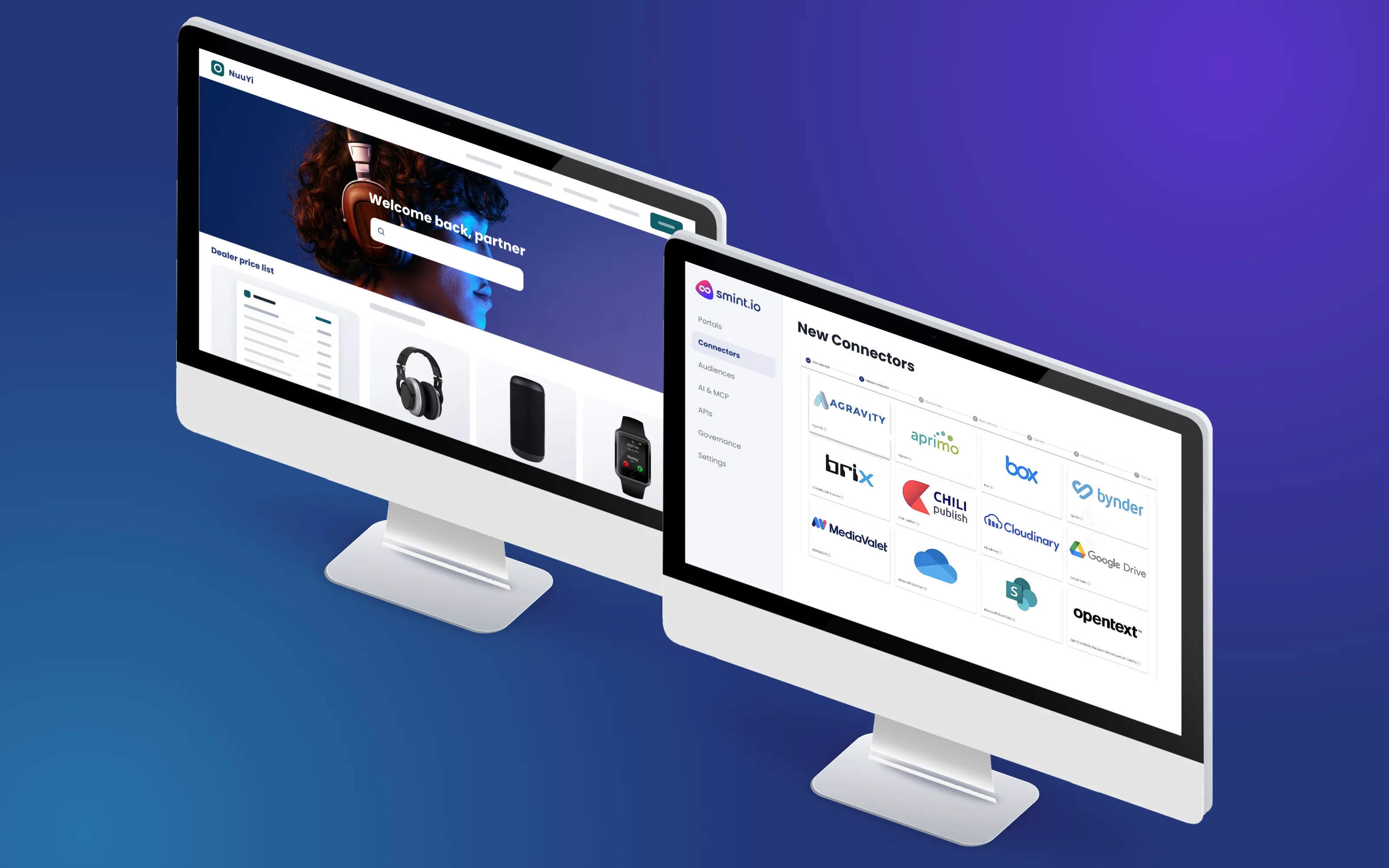
Every audience tool you run is one more integration, one more identity setup, one more security review and one more vendor. Smint.io is one layer on the systems you already operate, and every audience gets its experience from it: portals for people, Sminted AI for assistants and agents, the API for your own applications.
Your DAM, PIM, ECM or CMS stays the system of record. A connector links it to the Unified Semantic Context Layer, near real-time: push where your system supports it, pull where it doesn't. Nothing is re-uploaded.
One data basis serves portals for people, Sminted AI for assistants and agents, and the API for your own applications and downstream systems. One integration instead of one per audience tool.
SOC 2 Type II, audited annually since 2023. SSO via SAML or OIDC with SCIM provisioning. Audit trails for human and agent access. Self-hosting on AWS or Azure; hosting region your choice, including the EU.
By default the platform holds the search index, the asset metadata and preview files. Originals stay in your systems and are fetched on demand, or we host them where you want that. No new silo.
Every portal exposes a standard MCP server: one endpoint, any MCP client, no plugin per tool. An assistant or agent reads through it with the permissions of that specific portal user and nothing more, and every agent access is in the audit trail beside the human ones. Your own applications take the same content through the API, as some customers do to supply their partners. One data basis, three surfaces, one permission model.
How Sminted AI works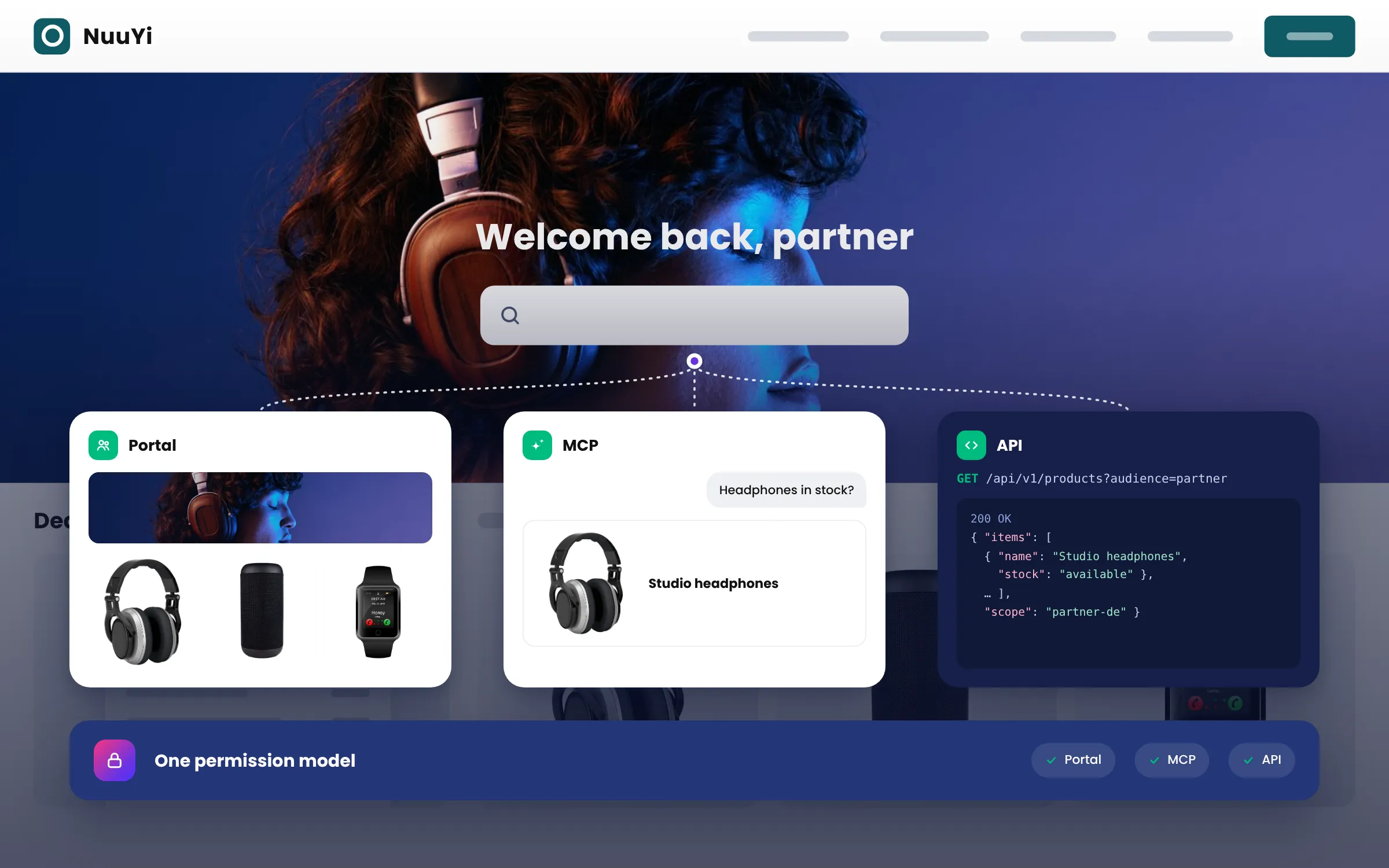
Your systems above, Smint.io in between, your audiences below.
Composable · swappable · your systems stay the system of record
Three platform pages carry the technical story: the foundation, the connectors into your systems, and the SDKs that make every component yours to extend.
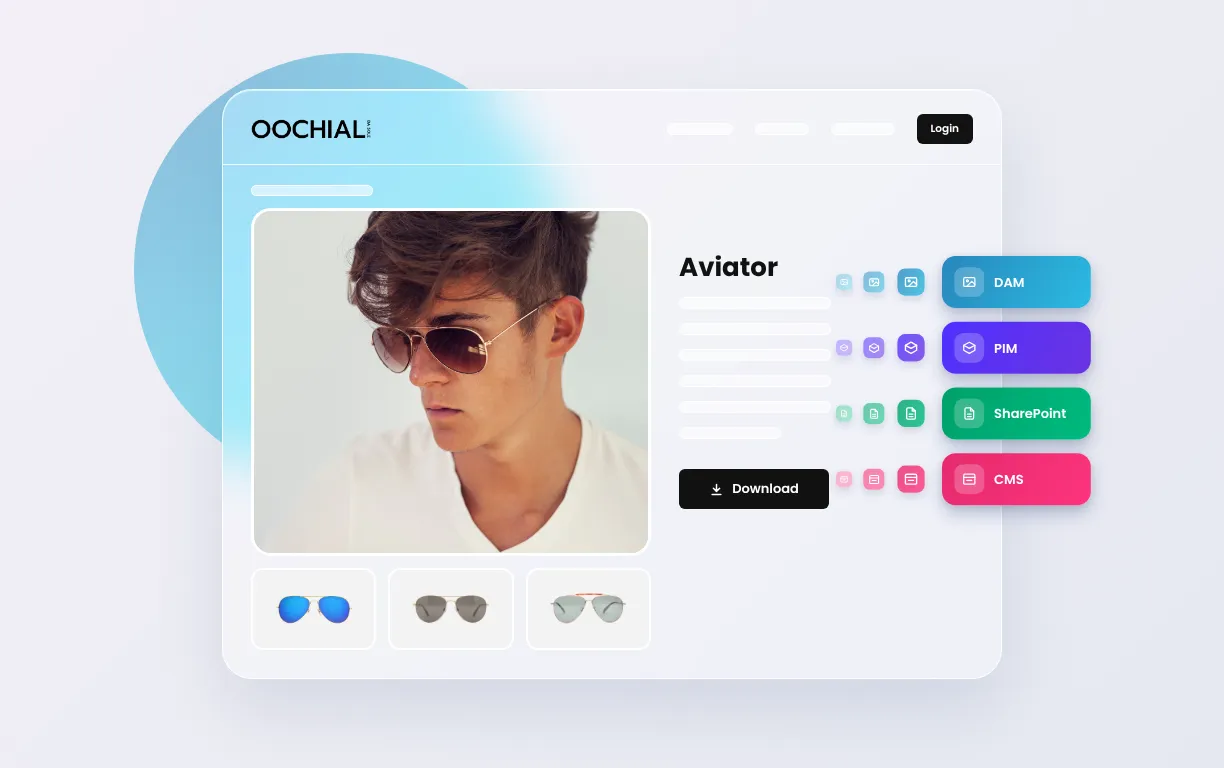
The foundation: one semantic model over every connected system, the basis for portals, AI and the API.
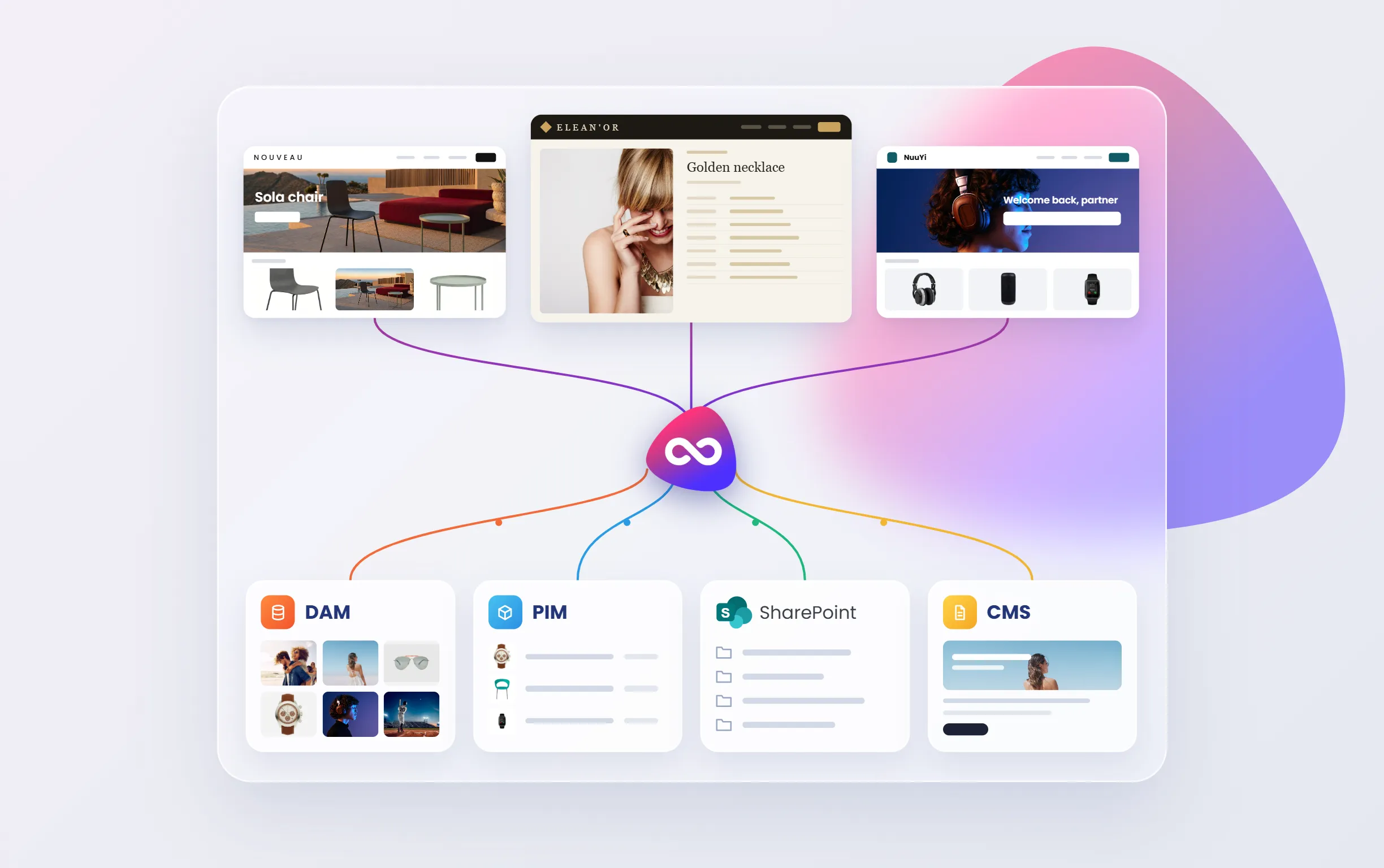
DAM, PIM, ECM, CMS, MRM and in-house systems, connected near real-time; swappable later.
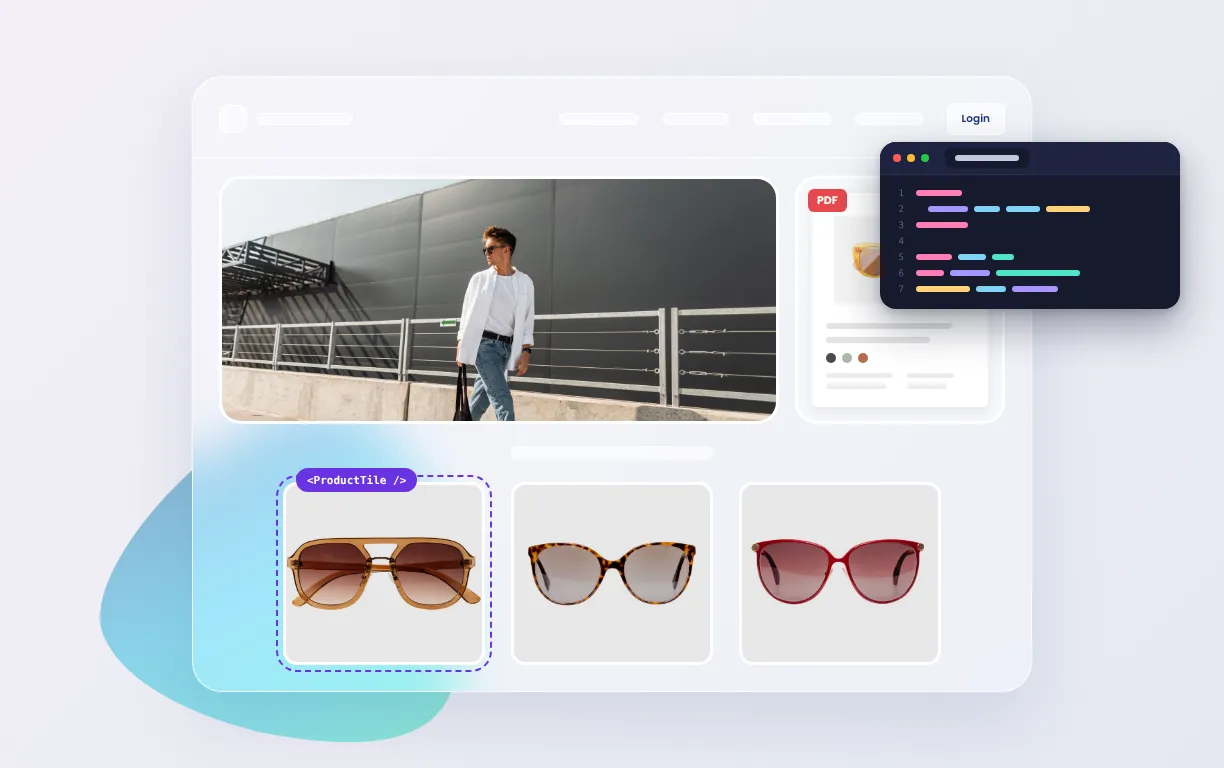
Every component has an SDK: connectors, data processors, identity providers, workflows, UI components.
The Agravity connector was built for its brand portal and is now a standard connector; one portal for more than 1,000 partners in 55+ countries.
Client portals operated in the provider's own VPC on AWS under strict isolation requirements.
Thron DAM and PIM on one foundation; an agency built the UI components with the SDKs.

Working with Smint.io enables our customers to quickly and easily publish assets in a customized user experience. The simplicity and the wide range of customization options are convincing with every further project.
By default: the search index, the asset metadata and preview files. Originals stay in your source systems and are fetched on demand. If you prefer, we host the originals as well. You can choose the hosting region, EU included, or run the platform in your own AWS or Azure account.
SSO via SAML or OIDC with your identity provider, and SCIM for automated user provisioning. Local user management where SSO isn't wanted. External audiences come in by invitation or register with their company email.
Don't worry, the portals stay up. Audience traffic is answered from the platform's own index. Only original downloads need your systems, and we can host those originals too if you want. A source can be changed later without touching the experiences on top. IHG replaced SharePoint with Censhare underneath a running portal.
Yes. The documentation portal at https://documentation.smint.io is public, with no account needed, and it has its own MCP server. It covers the platform API, the portal MCP server and the component SDKs.
Your content never left your systems in the first place. What the platform holds (e.g. index, metadata, previews and uploads) can be exported on request.
Agents see exactly what the portal user they act for may see. Every portal has a standard MCP server, and it applies that user's exact permissions. Agent access appears in the audit trail like human access.