
Website vs Content Portal: What Are They Actually Built For?
Table of Contents
- From Customer-Centric to Stakeholder-Centric Content Delivery
- Key Takeaways
- Why Traditional Websites Fail to Meet B2B Stakeholder Needs
- Delivering Consistent, Branded Content at Scale
- How Content Silos Hurt Brand Consistency and Speed to Market
- How Content Portals Solve Content Silos and Improve Efficiency
- Characteristics of Content Portals
- Types of Content Portals
- Benefits of Implementing a Content Portal
- FAQs
As an organization grows, so does the complexity of its content. A typical website might serve customers well, but what about dealers, partners, journalists, employees, or international teams?
The truth is that websites were not built to meet the diverse needs of modern B2B stakeholders. Content portals, on the other hand, were.
This article walks you through how websites and content portals differ, why that matters, and what your organization stands to gain by evolving your content delivery strategy.
From Customer-Centric to Stakeholder-Centric Content Delivery
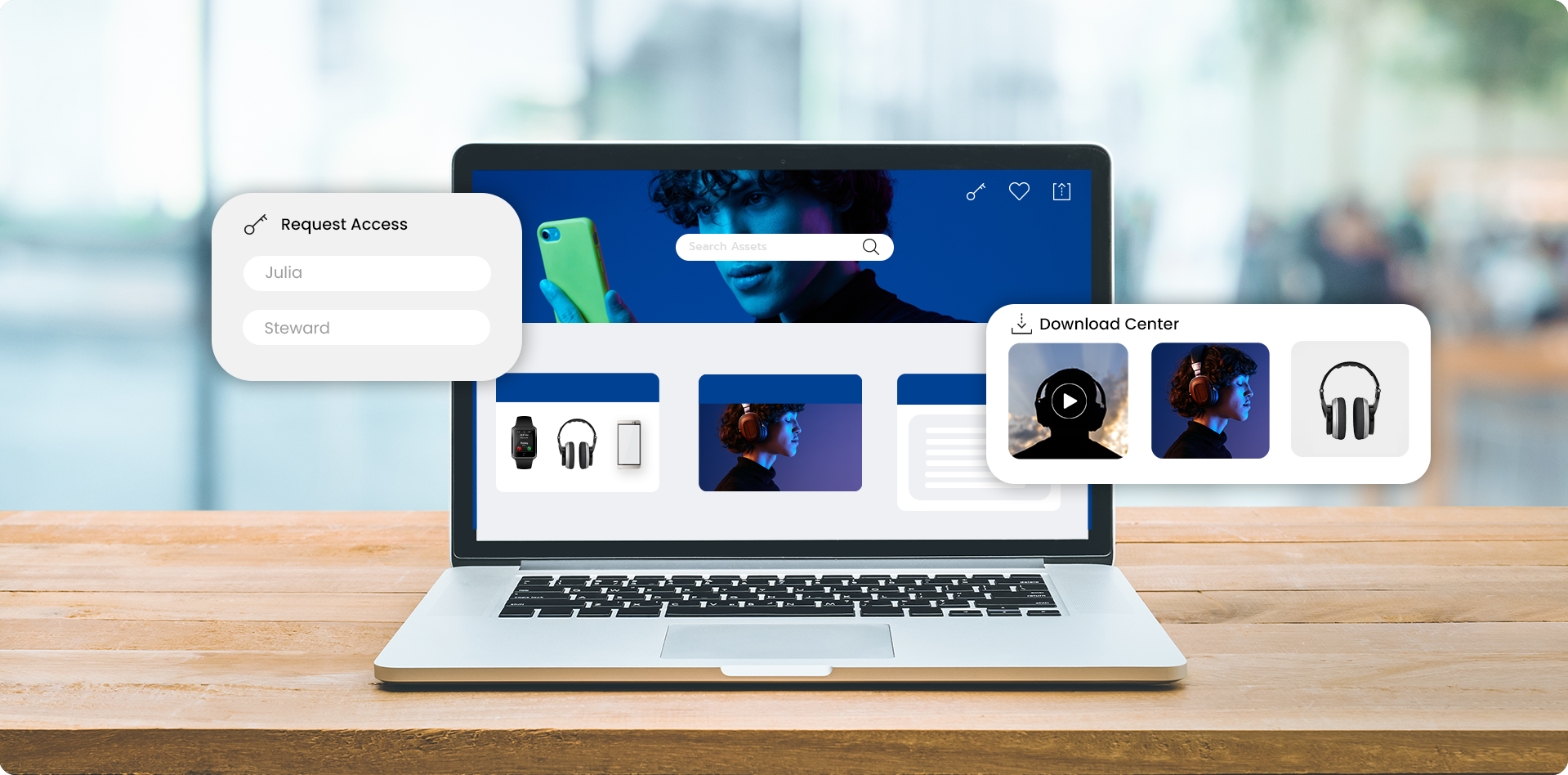
Traditional websites were primarily created with one audience in mind, the end customer. But today, B2B websites have become an overcrowded hub for many more groups:
- Press sections
- Dealer login areas
- Media libraries
- Download centers for manuals and datasheets
- Partner branding guidelines
That means a single website is now trying to serve multiple stakeholders with vastly different needs, making it harder to maintain relevance, clarity, and control.
Key Takeaways
- Caters to different audiences: Websites are built for public visitors, while content portals are designed for multiple stakeholder groups like partners, press, and internal teams.
- Delivers personalized content: Content portals deliver personalized content tailored to the user’s role, region, or partner type.
- Permission-based access: Websites struggle with access control, and portals are built for secure, permission-based delivery.
- Advanced search and filters: This makes it easier for users to find the right content quickly.
- On-brand: Content portals improve brand consistency by showing assets in the right context.
- Teamwork: Websites and portals are not competitors, they serve different purposes and work best together.
“Understand stakeholder symmetry: Find the appropriate balance of competing claims by various groups of stakeholders.” – Warren G. Bennis
Why Traditional Websites Fail to Meet B2B Stakeholder Needs
Different stakeholder groups have distinct content needs that a single website struggles to meet.
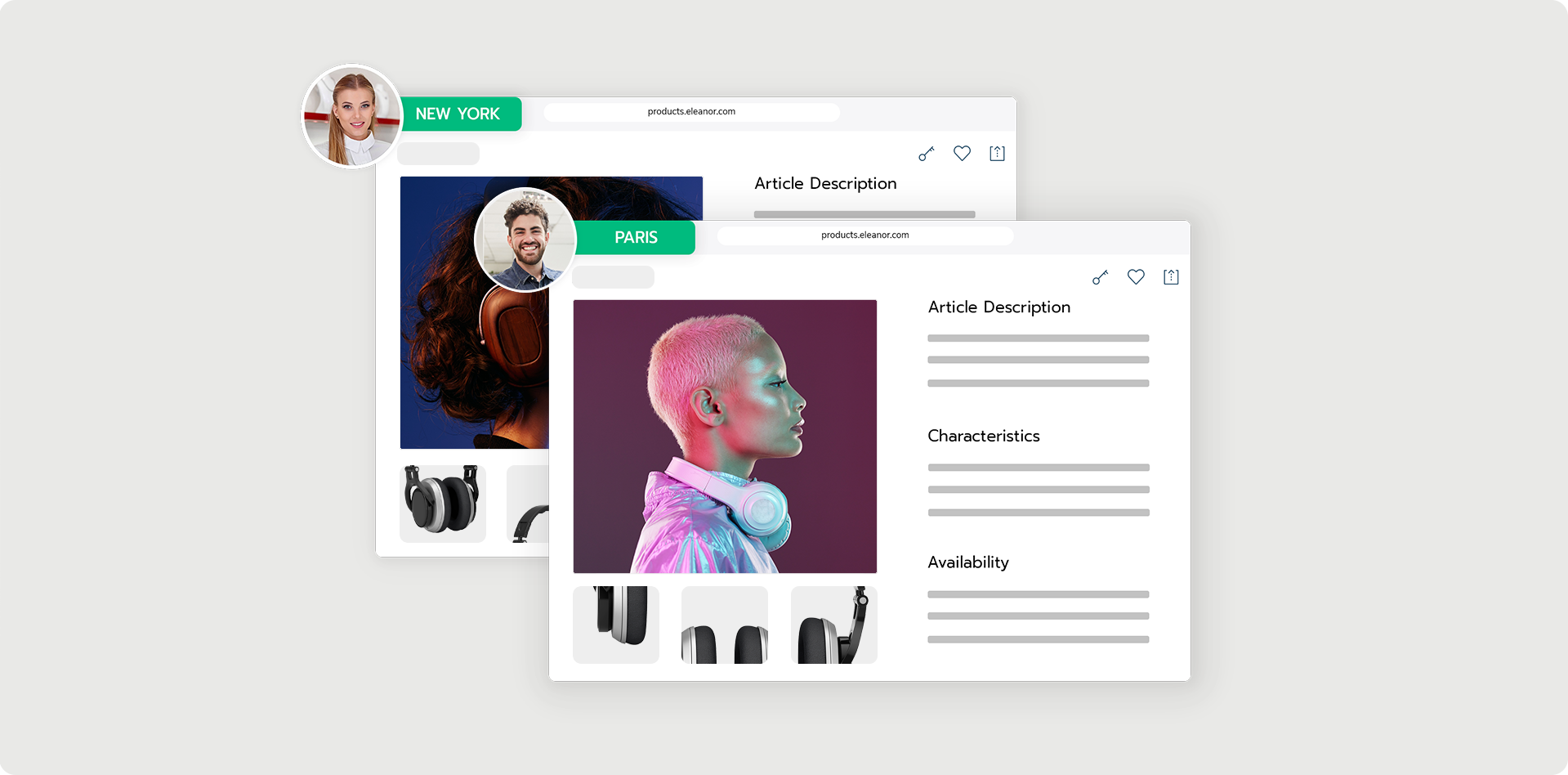
For example, your U.S. and European teams may require different brand assets and guidelines, making consistent content management challenging. Add to that the need for a fast, easy user authentication system to control access based on roles or regions.
Similarly, dealers across countries need personalized content, some require product manuals, others localized branding or pricing information.
Serving all these needs through one site leads to confusion and inefficiency.
In short, every stakeholder demands targeted content and secure access, which traditional websites are not built to handle effectively.
Delivering Consistent Branded Content at Scale
Do your content experiences truly reflect your corporate design?
For many marketing teams, delivering branded content through traditional systems like DAMs, PIMs, ECMs, or cloud storage can be frustrating. These platforms often lack the flexibility to present shared files.
Ever sent a file-sharing link via your content source that appeared in your corporate design?
Imagine delivering content straight from your existing storage systems, without re-uploading or duplicating files, and having it instantly appear in a fully branded environment, perfectly aligned with your corporate design.
Consider how this seamless, on-brand content delivery could elevate your overall brand experience and empower your marketing team to work more efficiently and confidently.

How Content Silos Hurt Brand Consistency and Speed to Market
Content silos are one of the biggest obstacles to efficient and scalable content management.
As teams grow and content is created across different regions and departments, it often ends up stored in disconnected systems like DAMs, PIMs, ECMs, cloud drives, or even individual desktops.
Updating PDFs might mean replacing them in multiple places. That’s not just time-consuming; it’s risky. Mistakes happen, old versions circulate, and brand consistency suffers.
We have seen it firsthand, some companies use five or more digital asset management systems across different teams. That means
- Content is scattered and hard to track
- Teams lose time searching for the right files
- Version control becomes a struggle
- Collaboration slows down
And yet, no one wants to give up “their” system. Each team is protective of its tools and workflows, making centralization feel impossible.
But these silos don’t just create frustration, they also cost businesses in productivity, brand clarity, and speed to market.
So the question is, how can you connect your existing systems without forcing teams to change how they work?
How Content Portals Solve Content Silos and Improve Efficiency
The concept of decoupled architecture, widely adopted in e-commerce, is now transforming how B2B brands manage and deliver content.
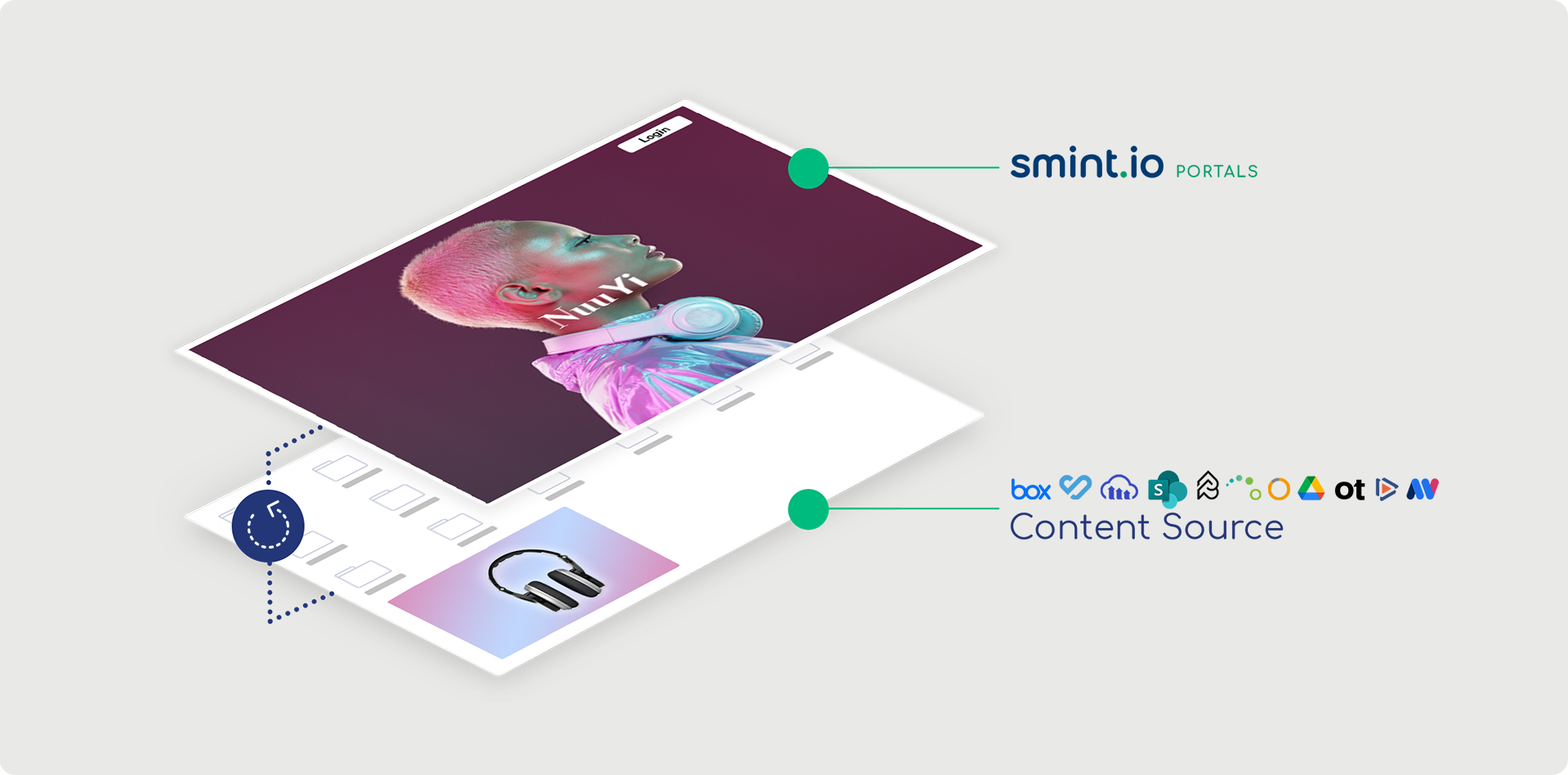
In simple terms, a content portal uses a decoupled architecture where the front end is separated from the back end, where your content actually lives.
Connected via APIs or plugins, this setup allows you to present content from multiple systems like DAMs, PIMs, or cloud storage without moving or duplicating files.
It’s simpler than it sounds.
Modern content portals are built for non-technical users and not just developers. They pull content directly from your existing systems and present it through a fully branded interface tailored to each stakeholder’s needs.
Best of all, with advanced permission controls, you can easily define who sees what by region, role, or partner type without ever going to the back-end systems or needing custom development.
Everything stays secure, organized, and always on-brand.
This shift isn’t a matter of if, it’s a matter of when!
Content portals are quickly becoming essential tools for brands that want to scale personalized content delivery while staying efficient, consistent, and in control.
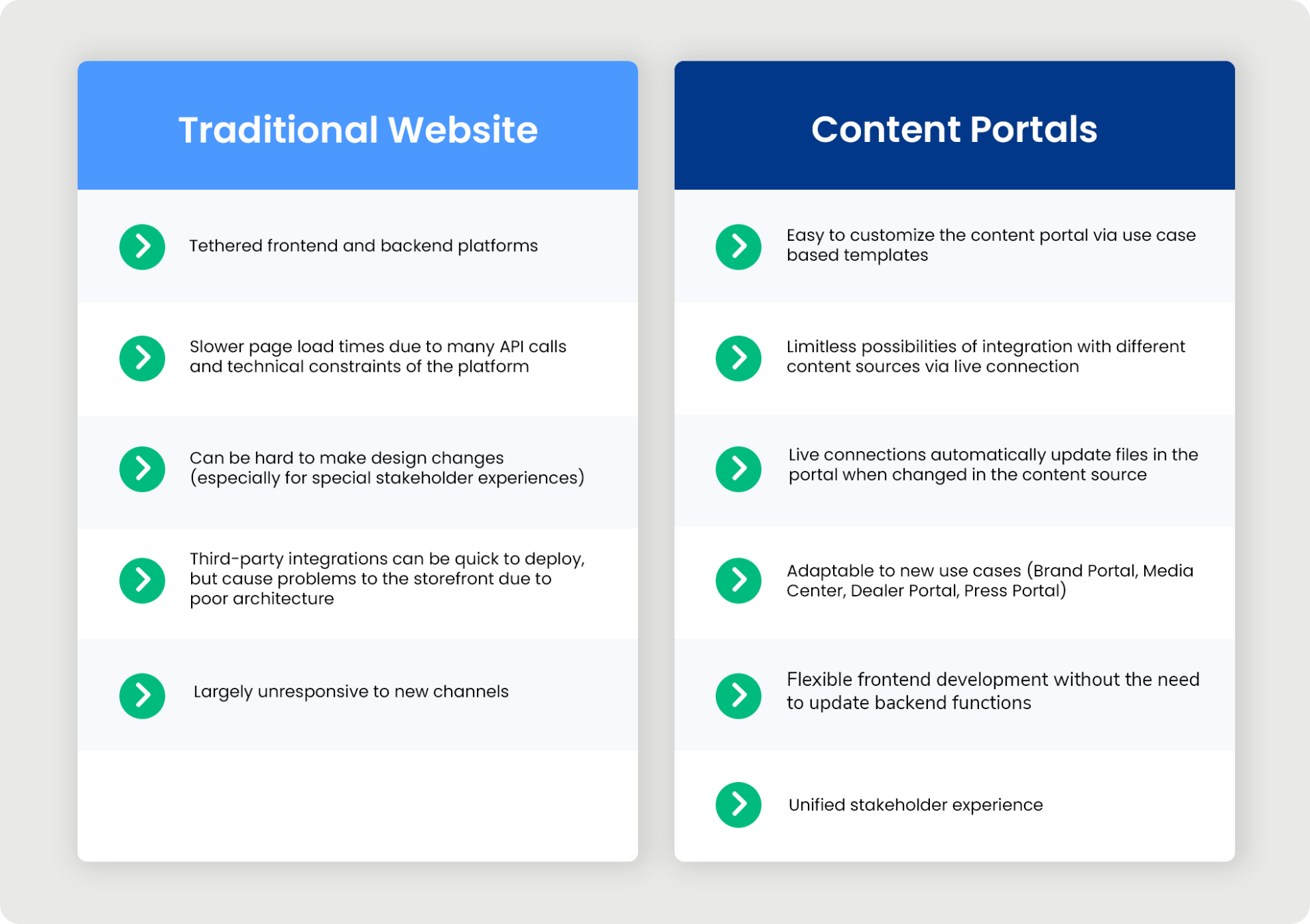
A quick comparison: Website vs Content Portal
Characteristics of Content Portals
- Content Aggregation: For instance, your sales teams might need quick access to product specs from a PIM, case studies from a CMS, and images from a DAM system, all delivered in one unified view.
- Personalization: By tailoring content based on user roles, preferences, or behaviors, content portals provide a more relevant, customized experience.
- Advanced Search and Navigation: Imagine being able to search across all your systems (DAM, PIM, CMS) for the specific product image your team needs, without manually sifting through each platform.
- Application Integration: Content portals seamlessly integrate with various applications and services, creating a smooth, unified user experience across platforms.
Types of Content Portals
Content portals come in different types, depending on the audience they serve and the purpose they fulfill.
While some are built for broad access, others are tailored to specific industries or user groups. Here’s a quick overview of the two main types:
Horizontal Portal: These portals cater to a wide, diverse audience by providing access to a broad spectrum of information and services.
They are typically used in scenarios where content is meant for the general public or multiple user groups. Examples include public information platforms or news sites.
Vertical Portal: Designed for specific industries, topics, or audience segments, vertical portals deliver highly targeted content and tools tailored to niche needs.
These are ideal for dealer networks, media partners, internal teams, or industry-specific stakeholders who require tailored, role-relevant information.

Benefits of Implementing a Content Portal
Implementing a content portal is not just about better content access, it’s a strategic move that transforms how organizations manage, distribute, and personalize content for various stakeholders.
- Centralized Access: All content is available in one place, making it easier for users to find what they need, fast.
- Personalized Delivery: Role-based content access ensures stakeholders only see relevant content, enhancing engagement and clarity.
- Improved Collaboration: Content portals enhance teamwork by providing teams and partners with shared, real-time access to the latest resources, ensuring everyone stays aligned and up to date.
- Streamlined Content Management: A unified content portal simplifies content management, updates, and distribution, reducing manual work and ensuring consistency across all channels.
- Stronger Brand Control: Deliver content in a branded environment with built-in permission controls for consistency and compliance.
- Faster Execution: Quick publishing and real-time availability accelerate campaign rollouts and time-to-market.
As businesses continue to scale and diversify, the need for personalized, efficient content delivery will only increase.
The future of content management isn’t about choosing between a website and a portal but rather integrating these solutions to deliver a seamless experience across all touchpoints.
The shift to content portals is not just a trend, it is an essential evolution for staying competitive in the modern business landscape.
FAQs
Ready to move beyond the limits of your website?
Discover how a Smint.io-powered content portals can streamline your stakeholder communication, break down silos, and deliver on-brand experiences at scale.
Read more
Grow your knowledge
Join hundreds of marketing and brand professionals. Keep up-to-date with the hottest news regarding content portals, brand experience and digital touchpoints. Don’t miss out!