
How Digital Asset Management is shaping the future
As businesses continue to embrace the digital-first era, one thing has become clear, effective management of digital assets is crucial for growth and efficiency.
The DAM (Digital Asset Management) Trends Report, by MediaValet a leading DAM provider, offers a comprehensive look into how organizations are using DAM to not only streamline operations but to transform their entire approach to content management, marketing, and brand protection.
In 2024, DAM adoption accelerated rapidly. Over 70% of organizations moved from traditional file storage to dedicated DAM platforms. These systems now manage more than brand assets, including event content, sales materials, and multimedia libraries, making DAM a strategic business tool rather than just a storage solution.
The 2025 DAM Trends Report confirms this shift. DAM is no longer just software for managing files. It is a core system that supports growth, efficiency, and measurable business results across industries.
Key Takeaways
- Accelerating adoption: DAM adoption is accelerating as companies move away from basic file storage toward dedicated platforms.
- Cross-team usage: DAM is no longer just for marketing, it is now used across sales, product, and customer experience teams.
- Time savings: Organizations using DAM save significant time by reducing asset search, sharing, and duplication.
- Cost reduction: Many companies report direct cost savings through tool consolidation and better asset reuse.
- AI enhancement: AI features like face recognition and video intelligence are turning DAM into a smarter, more valuable system.
- Collaboration boost: DAM improves collaboration by giving teams a single source of truth for digital assets.

DAM systems are saving time and money
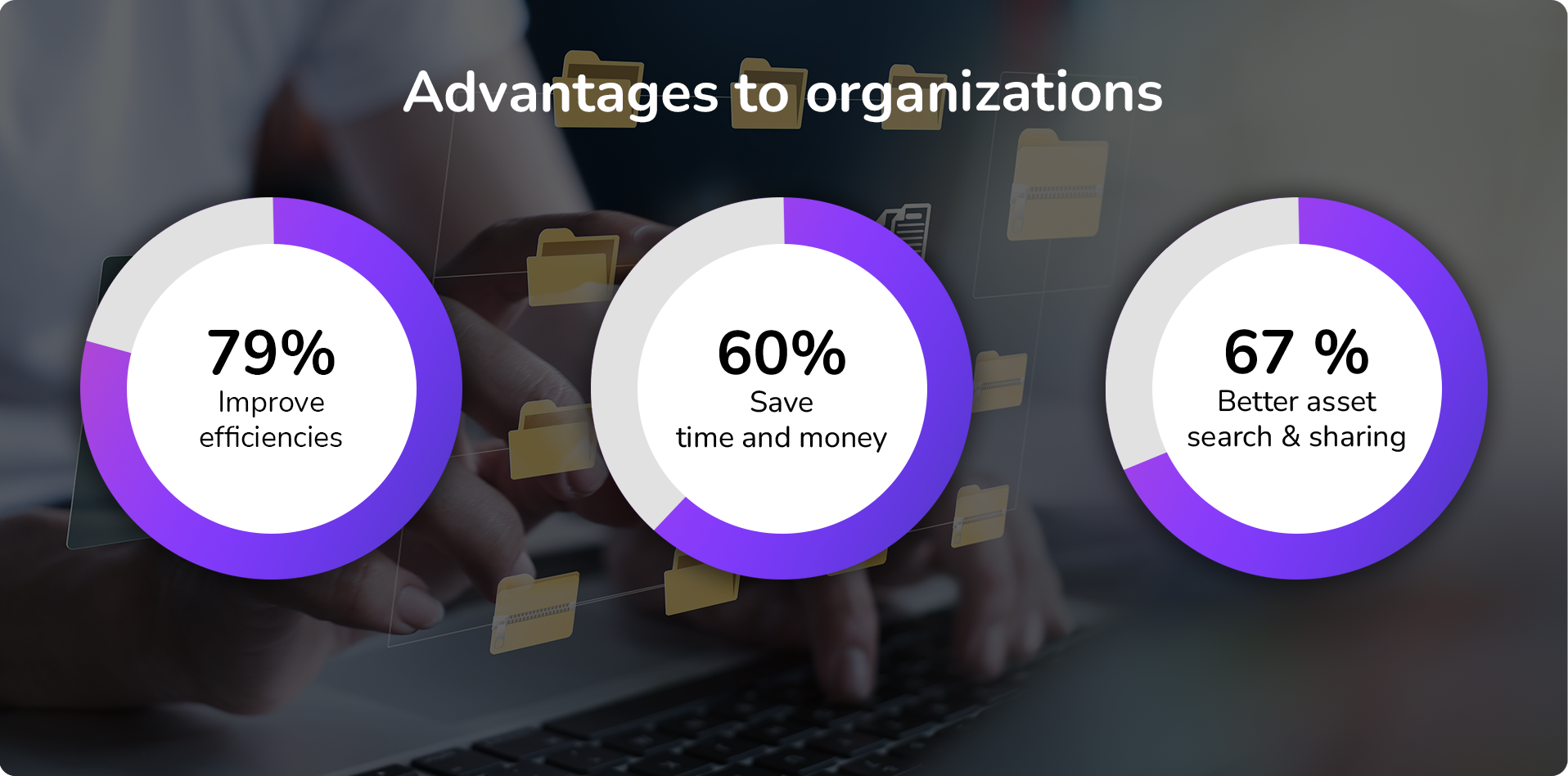
In today’s competitive business landscape, operational efficiency is non-negotiable. According to the 2025 DAM trends report, 60% of organizations leveraging DAM systems are experiencing significant time and cost savings, translating into real business value.
On average, organizations using DAM save 13.5 hours per week on asset-related tasks such as searching, sharing, and recreating digital assets. This is equivalent to reclaiming 34% of a typical workweek. This allows teams to focus on more strategic and impactful activities.
DAM drives these gains by:
- Automating repetitive processes
- Enabling self-service access to assets
- Reducing software licensing costs
- Preventing duplicate assets
- Simplifying onboarding
DAM is no longer just about managing content. It improves how teams work.
Key findings:
- Enhanced efficiency: 79% of DAM users reported streamlined processes, resulting in greater productivity.
- Cost savings: 60% of organizations that use DAM report cost savings.
- Time-saving impact: Organizations save up to 4.5 hours per week searching for assets, 4 hours sharing them, and 5 hours avoiding asset duplication.
Expanding DAM is achieving business KPI’s
DAM has moved beyond marketing. In 2024, 57% of organizations migrated from local storage and 46% from shared servers to DAM platforms.
Digital Asset Management is increasingly being integrated into a broader range of business functions, with departments like sales, customer experience, and even product management utilizing its capabilities.
One standout feature is the introduction of mobile access, which enables teams to manage, retrieve, and share digital assets on the go. In an era where remote work and flexible working models have become the norm, mobile accessibility ensures team productivity and responsiveness, regardless of location.
AI-Powered features: The game changer
Advanced AI capabilities are driving DAM systems to new heights. Face recognition and video intelligence are helping organizations like MediaValet and Fred Rogers Productions unlock hidden value within their asset libraries.
- Video intelligence can automatically transcribe footage and identify people, topics, and scenes.
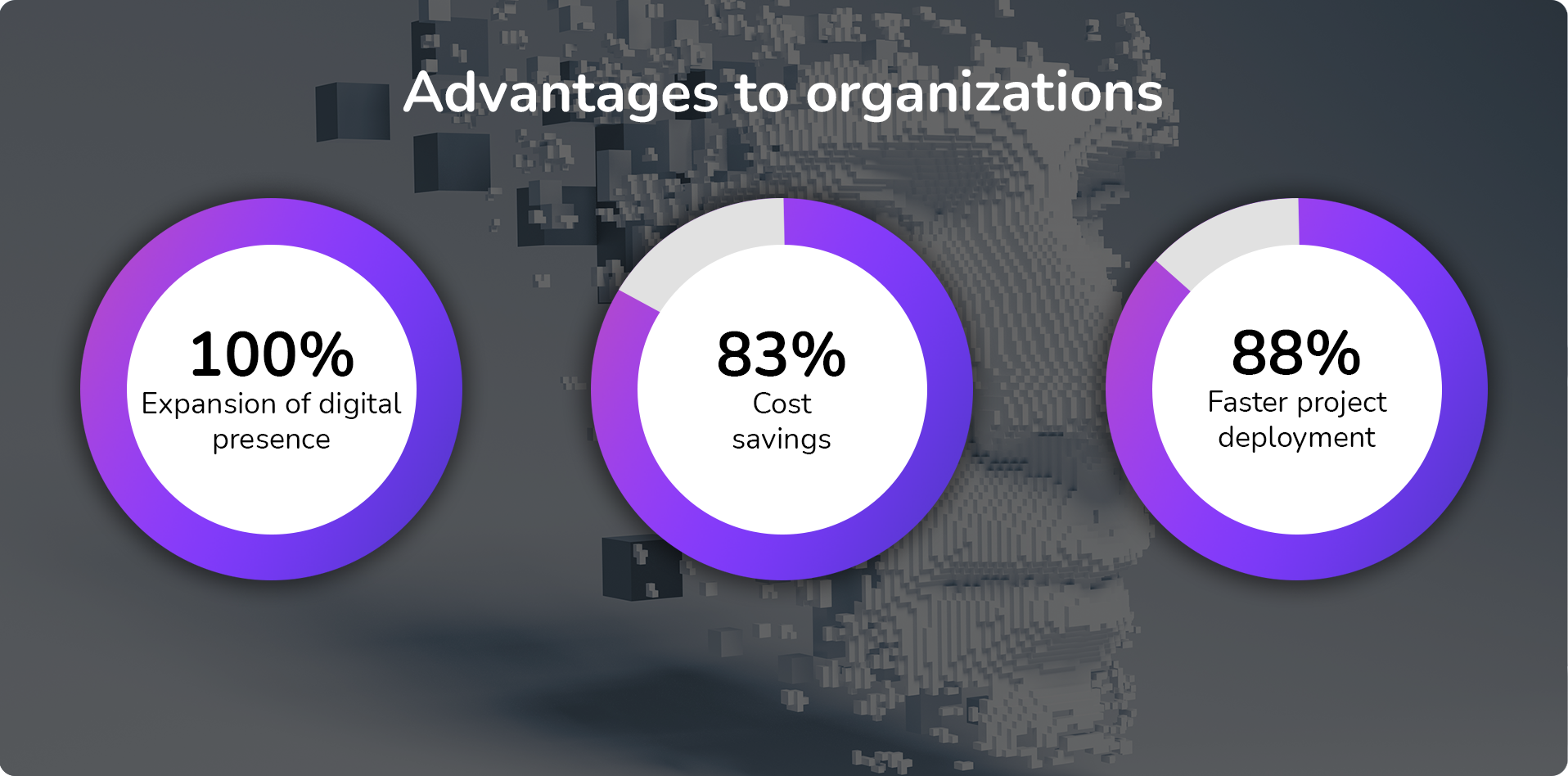
- 83% of organizations using face recognition report financial savings.
- 100% of those using video intelligence report an expanded digital presence.
DAM is not just about storing and organizing files anymore, it’s becoming a smart system that powers better decision-making, automates time-consuming tasks, and generates insights that were previously unreachable.
Key findings:
- Enhanced digital presence: Every organization using Video Intelligence has successfully expanded its digital presence.
- Increased cost efficiency: 83% of organizations leveraging Face Recognition have reported cost savings through their DAM systems.
- Accelerated project deployment: 88% of companies with mobile access to DAM experience faster project deployment.
DAM software enables efficiency gains and resource allocation
One of the standout insights from the 2025 DAM Trends Report is how DAM systems are unlocking newfound efficiency, allowing organizations to redistribute their resources toward more strategic and impactful work.
DAM helps organizations by:
- Reducing time spent searching for files, duplicating assets, and managing manual workflows
- Freeing up time for content creation, planning, and customer engagement
- Removing operational bottlenecks that slow teams down
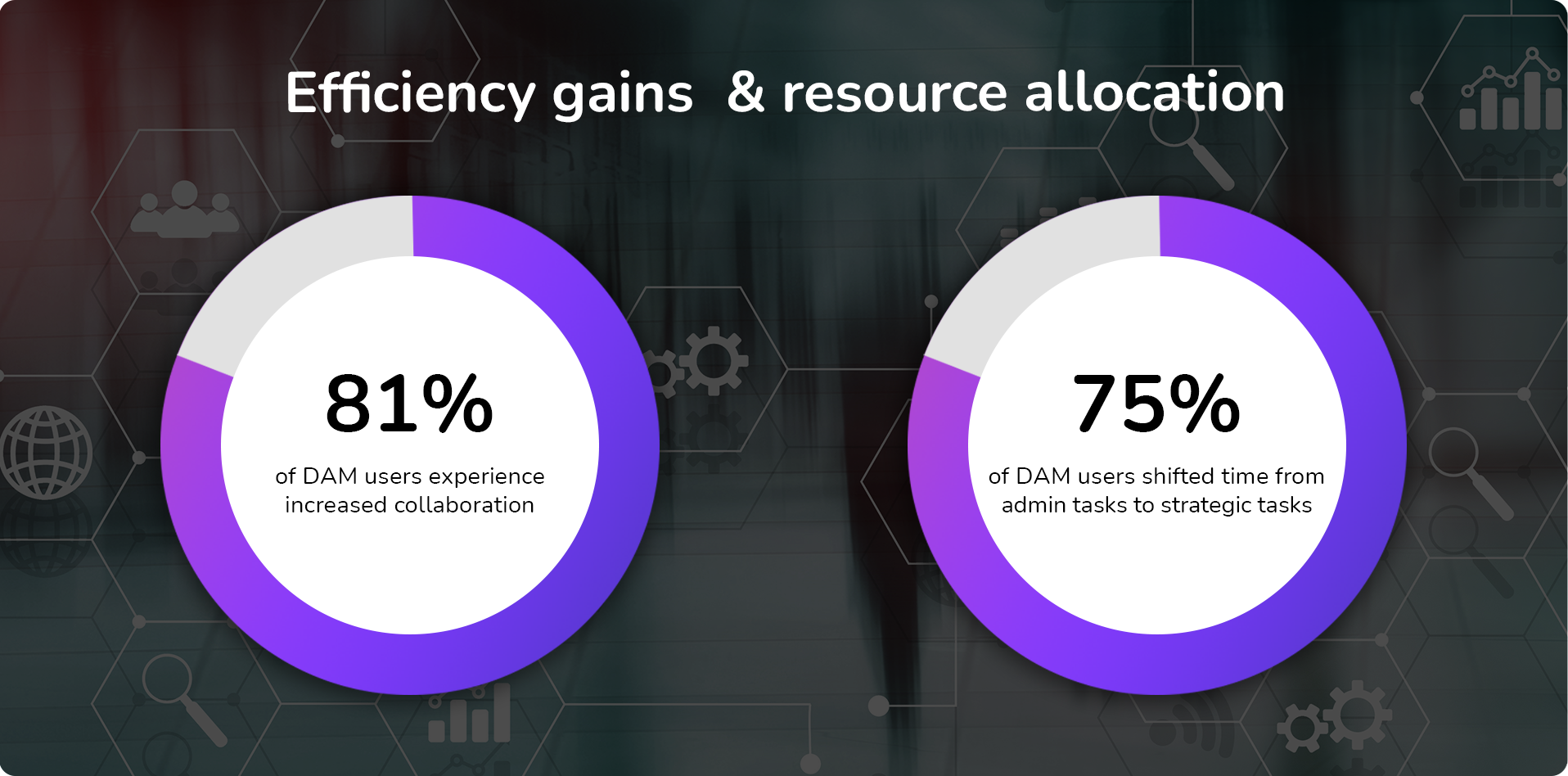
The report highlights that 81% of DAM users have experienced increased cross-departmental collaboration. By centralizing all digital assets in a single, accessible platform, DAM systems foster smoother communication and collaboration between teams, eliminating bottlenecks and ensuring everyone is working with the latest materials.
This creates an environment where departments like marketing, sales, and product development can work in unison, improving operational efficiency across the board.
Additionally, 75% of DAM users have successfully reallocated the time saved from administrative tasks to more impactful, strategic projects.
Whether it’s enhancing marketing campaigns, developing new customer experiences, or spearheading digital transformation efforts, the ability to shift focus from low-level tasks to high-value activities enhances both productivity and business outcomes.
Key findings
- Resource Reallocation: 75% of DAM users have redirected resources toward more impactful tasks.
- Enhanced Collaboration: 81% of DAM users report improved collaboration across departments.
DAM systems are driving better marketing outcomes
The role of DAM in marketing has been transformative, especially when integrated with Project Management (PM) tools like Wrike, Asana, or Monday.com. The synergy between DAM and PM platforms ensures that assets and project tasks are managed in a unified environment, reducing information silos and enabling faster project execution.
Marketing teams using DAM report:
- Stronger brand recognition
- Faster campaign rollouts
- Better campaign analysis
Integrating templating tools with DAM is a major advantage for marketers. It enables on-brand content creation that can be adapted across departments while reducing repetitive production work.
This ensures that marketing materials are consistent, while also saving time and resources on repetitive work.
100% of marketing departments with this integration experienced faster project deployment and stronger brand consistency. Moreover, the integration of DAM systems with templating and PM tools results in faster time-to-market for campaigns, an essential factor in today’s competitive digital landscape.
Teams can automate the creation, approval, and distribution of assets, enabling them to respond to market demands with agility and precision.
Key findings
- Faster project deployment: All marketing departments using DAM experience quicker project turnarounds.
- Cost Savings: 80% of marketing teams that integrate DAM with project management tools realize cost savings.
- Stronger Brand Consistency: 100% of respondents who integrate templating solutions with DAM report enhanced brand consistency.

DAM enhancing brand protection and compliance
In an era where digital security and regulatory compliance are top priorities, Digital Asset Management (DAM) systems play a crucial role in protecting brand assets.
DAM supports security and compliance by:
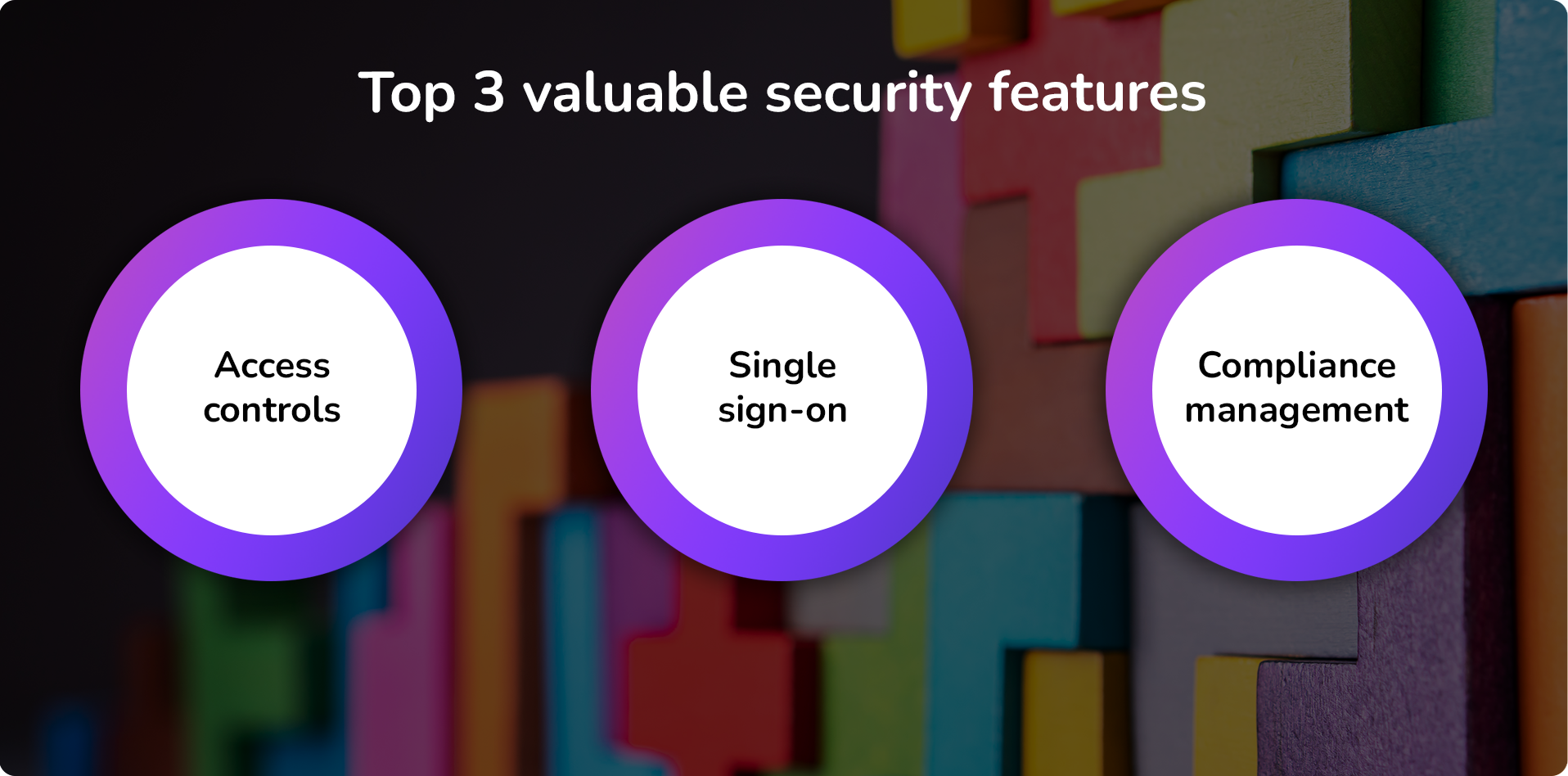
- Providing controlled access to digital assets
- Reducing the risk of unauthorized use
- Protecting against data breaches and cyber threats
The report underscores this by revealing that 95% of DAM users are satisfied with their system’s security capabilities, a figure that rises to 100% when advanced features like single sign-on (SSO) are integrated.
These features streamline access while ensuring that only authorized personnel can access sensitive assets, minimizing the risk of unauthorized use.
Many DAM platforms also meet strict industry standards, including SOC 2 and ISO 27001. These certifications ensure assets are handled securely and in line with regulatory requirements, while also strengthening customer trust.
Beyond Data protection, DAM systems play a pivotal role in maintaining brand consistency. By enforcing strict control over how assets are accessed, shared, and distributed, DAM solutions ensure that every piece of content aligns with brand guidelines.
Key findings
- Improved Brand Consistency: Every DAM user with single sign-on (SSO) has enhanced brand consistency.
- High-security satisfaction: 95% of DAM users express satisfaction with their system’s security features.
- Enhanced compliance: 86% of users with SSO-integrated DAM have improved compliance.
Conclusion: The strategic importance of DAM in 2025 and beyond
As the digital landscape continues to evolve, the demand for robust and scalable Digital Asset Management (DAM) solutions only grows. The 2025 DAM Trends Report highlights how organizations utilizing DAM are not just boosting operational efficiency, they are unlocking new pathways for creativity, collaboration, and sustainable business growth.
From streamlining workflows and cutting costs to driving marketing success and ensuring brand integrity, DAM systems have become essential tools for thriving in today’s dynamic, fast-paced environment.
For organizations aiming to stay ahead, investing in a DAM platform is no longer optional; it’s a strategic necessity. Embracing DAM technology now means preparing for long-term success by efficiently managing expanding digital asset libraries, safeguarding brand identity, and swiftly adapting to changing market demands.
Those who prioritize DAM are setting themselves up for a future of agility, innovation, and competitive advantage.
FAQs
Read more



Grow your knowledge
Join hundreds of marketing and brand professionals. Keep up-to-date with the hottest news regarding content portals, brand experience and digital touchpoints. Don’t miss out!